Since 1981 — Agra, India
ODM Footwear Manufacturer — Design, Development and Production for Women's Leather Footwear
Last updated:
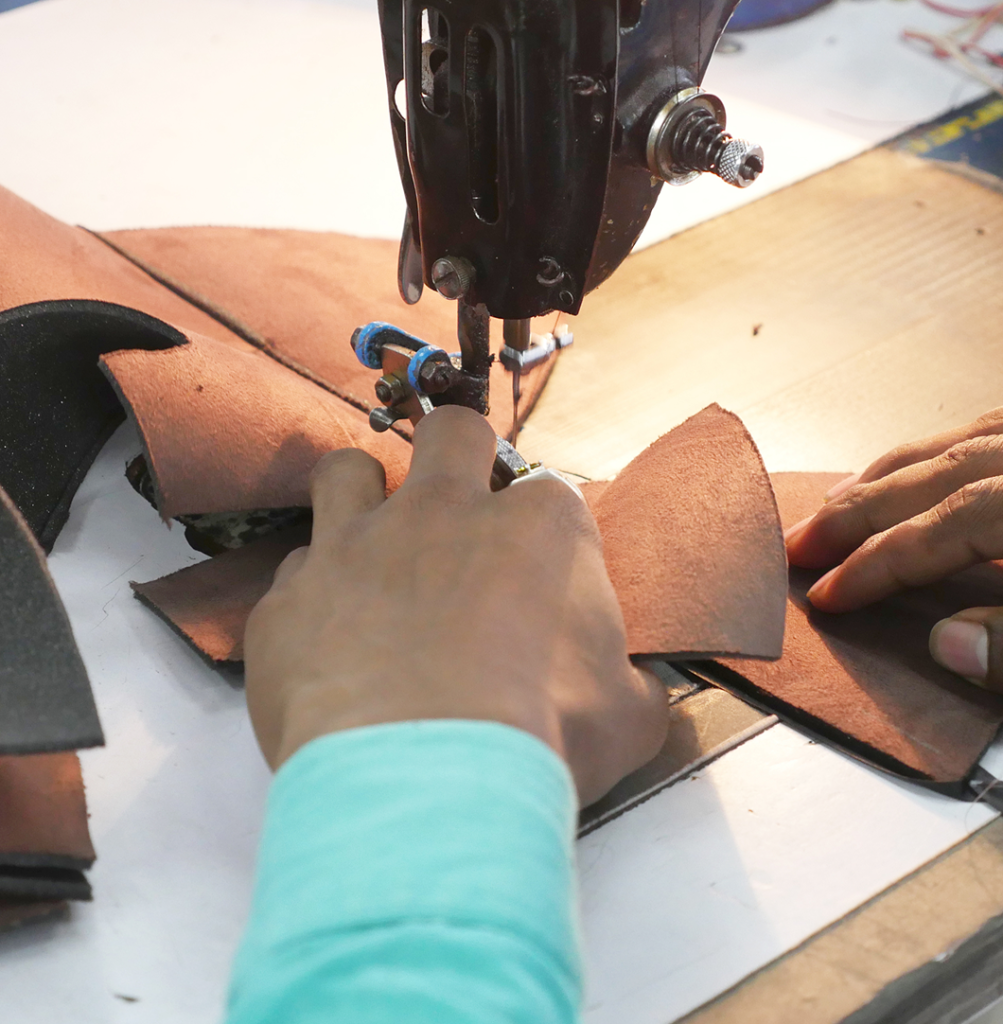
Foot On Shoes is an ODM women’s leather footwear manufacturer based in Agra, India. Under an ODM arrangement we develop the design as wellmas producing the shoe — you bring the brief, the market and the price architecture, and we return a commercially viable range. Founded in 1981, we produce 1,800–2,000 pairs a day for brands and retailers in the UK, EU, USA and Japan.
1981
Founded
1,800–2,000
Pairs / Day
2–3 Wks
Sampling
98%
On-Time Delivery
4
Export Markets





ODM vs OEM
What is ODM footwear manufacturing?
ODM — Original Design Manufacturing — means the factory designs and develops the product as well as making it, so the brand buys a finished range rather than supplying finished technical drawings.
The distinction that matters commercially is where design responsibility sits. Neither model is superior — Foot On Shoes works both ways, and many customers use OEM for their signature styles and ODM for the range around them.
OEM
You supply the design
You supply the design and specification. The factory builds to your drawings. You carry the design cost, the design risk and the design capability in-house.
ODM
We develop the range
You supply the brief — the customer, the price point, the season, the market — and the factory develops the range against it. You review, edit and approve. The design capability sits with the manufacturer.
ODM suits brands scaling a range faster than they can staff a design and development team, brands entering a new category, and retailers who need commercial product against a price architecture rather than a specific creative vision.
Our range
What does Foot On Shoes design and develop?
Women’s leather footwear across sandals, heels, ballerinas, loafers, trainers, boots and sneakers — all leather, all at volume.
Our development team works from a commercial brief rather than a mood board. A workable brief
usually contains:
1
Target customer and market
A UK high-street buyer and a German independent retailer want different lasts, different size curves and different price architecture.
2
Landed price target
This drives material selection and construction more than any other input, and is the single most useful thing a brand can be specific about early.
3
Season and delivery window
Working backwards from the retail date, not forwards from today.
4
Category and volume expectation
Which styles carry the range, and which are there for breadth.
From that, we develop the range, produce samples in 2–3 weeks, and iterate to approval before bulk production begins.
Lead times
How long does ODM development take?
Sampling runs to 2–3 weeks per round, with bulk production following at a 60–90 day turnaround from confirmed specification.
| Stage | Timing |
|---|---|
| Brief and range direction | Agreed with your team |
| Design development and first samples | 2–3 weeks |
| Review, revision and approval | Driven by your review cycle |
| Bulk production | 60–90 days from confirmed specification |
The variable in this sequence is almost never production — it’s the approval loop. Every material or construction change after confirmation restarts part of the sequence. Brands that hold a fixed weekly review slot during development consistently ship earlier than brands that review when convenient. We track on-time delivery internally at 98%, measured against the confirmed date.
Minimums
What is the minimum order for ODM production?
300 pairs per colour and 600 pairs per style — both thresholds apply.
300
Pairs per colour
600
Pairs per style
A first order of one style in two colourways at 300 pairs each meets the minimum and gives you a market read on two colours rather than one — usually the better structure for a first range. Production capacity runs at 1,800–2,000 pairs a day, so a 600-pair first order is roughly a third of a day’s output. The minimum exists because of leather dye lots and per-style tooling costs, not because of scale preference.
Terms
Who owns the design in an ODM arrangement?
Design ownership is agreed in writing before development begins, and exclusivity is a commercial term rather than an assumption.
This is the question brands most often leave until too late. There are three common structures, and all are workable provided they are explicit — agreed per style, before sampling starts.
Exclusive to the brand
The developed style is not offered to anyone else. Agreed per style, usually with a volume commitment attached.
Exclusive by market or period
The style is exclusive within a defined
territory or season.
Open range
Developed styles available to multiple
customers, typically at a lower
development cost.
Standards
What quality and compliance standards apply?
400+ quality checkpoints across a production run, pre-shipment inspection at AQL 2.5, and audited social and environmental
compliance.
400+
Checkpoints across incoming material, cutting, closing, lasting, bottoming, finishing and packing – pre-shipment inspection at AQL 2.5.
SEDEX / SA8000
Plus ISO 9001, HIGG, RCS, and REACH compliance held.
In-house
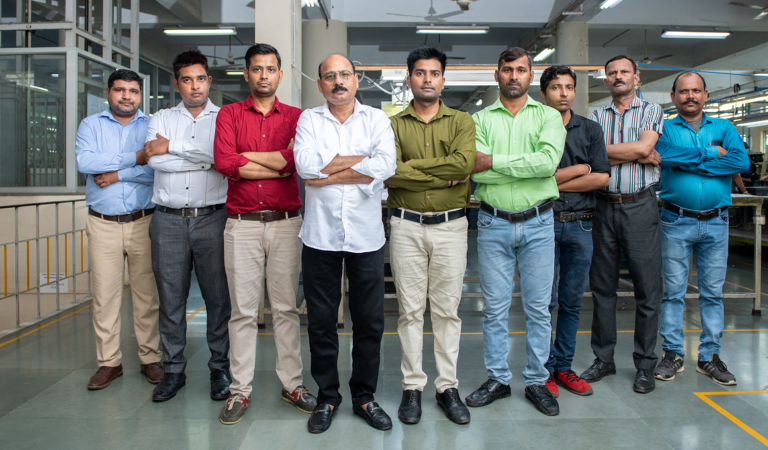
Production entirely in-house, no subcontracting – the factory you audit is the factory making your shoes.
~41%
Of operational energy from on- site solar.
Sourcing
Why manufacture in India rather than elsewhere?
India combines an established leather footwear base with independent trade access, which matters to brands diversifying their sourcing footprint.
Agra has produced leather footwear for generations, which means an available skilled workforce, a deep component and materials supply chain nearby, and tanning capacity within the region. For brands rebalancing away from a single-country sourcing base, India offers scale without the concentration risk.
1981
Manufacturing in Agra since
25 years
Consecutive exhibitor at Expo Riva Schuh — where most long-standing
European relationships began
How do I start?
Send a brief with your target market, price point, category and delivery window to solutions@fos.co.in. We will come back with a view on feasibility against your price architecture and timeline before any development work begins — including telling you if what you are asking for does not work at the price you have in mind.
FAQs
Common questions from buying teams about our manufacturing capabilities, sampling, and certifications.
Yes. SEDEX, SA8000, HIGG and RCS. All materials for EU and UK orders are REACH compliant.
We work with global fashion retailers and premium brands primarily in the UK, EU, US and Japan.